Comment choisir la bonne presse à vêtements pour votre entreprise de couture: un guide pratique pour l'acheteur
2026-10-12
.gtr-container-a7f3c9 {
font-family: Verdana, Helvetica, "Times New Roman", Arial, sans-serif;
font-size: 14px;
line-height: 1.6;
color: #1a1a2e;
max-width: 100%;
box-sizing: border-box;
padding: 0;
margin: 0;
}
.gtr-container-a7f3c9 *,
.gtr-container-a7f3c9 *::before,
.gtr-container-a7f3c9 *::after {
box-sizing: border-box;
}
.gtr-container-a7f3c9 p {
font-size: 14px;
line-height: 1.6;
text-align: left;
margin: 0 0 14px 0;
color: #2c2c3e;
}
.gtr-container-a7f3c9 .gtr-h2 {
font-size: 18px;
font-weight: bold;
color: #0000FF;
line-height: 1.4;
margin: 28px 0 12px 0;
padding: 0 0 8px 0;
border-bottom: 2px solid #d0d0ff;
letter-spacing: 0.2px;
}
.gtr-container-a7f3c9 .gtr-h2:first-child {
margin-top: 0;
}
.gtr-container-a7f3c9 img {
display: inline-block;
vertical-align: top;
margin: 4px 6px 4px 0;
border-radius: 6px;
}
.gtr-container-a7f3c9 .gtr-table-wrap {
overflow-x: auto;
margin: 18px 0;
border-radius: 8px;
box-shadow: 0 1px 4px rgba(0, 0, 255, 0.08);
}
.gtr-container-a7f3c9 table {
width: 100%;
border-collapse: collapse !important;
border-spacing: 0 !important;
border: 1px solid #c5c5f0 !important;
font-size: 14px !important;
background-color: #ffffff !important;
table-layout: auto;
}
.gtr-container-a7f3c9 table th {
background-color: #0000FF !important;
color: #ffffff !important;
font-size: 14px !important;
font-weight: bold !important;
text-align: left !important;
padding: 10px 12px !important;
border: 1px solid #0000cc !important;
line-height: 1.5 !important;
word-break: normal !important;
overflow-wrap: break-word !important;
}
.gtr-container-a7f3c9 table td {
background-color: #ffffff !important;
color: #2c2c3e !important;
font-size: 14px !important;
text-align: left !important;
padding: 10px 12px !important;
border: 1px solid #d8d8f5 !important;
line-height: 1.5 !important;
word-break: normal !important;
overflow-wrap: break-word !important;
}
.gtr-container-a7f3c9 table tbody tr:nth-child(even) td {
background-color: #f4f4ff !important;
}
.gtr-container-a7f3c9 table tbody tr:hover td {
background-color: #e8e8ff !important;
}
.gtr-container-a7f3c9 ul {
list-style: none !important;
margin: 14px 0;
padding: 0 0 0 20px;
}
.gtr-container-a7f3c9 ul li {
position: relative;
font-size: 14px;
line-height: 1.6;
text-align: left;
margin: 0 0 10px 0;
padding: 0 0 0 4px;
color: #2c2c3e;
}
.gtr-container-a7f3c9 ul li::before {
content: "•" !important;
position: absolute !important;
left: -16px !important;
color: #0000FF !important;
font-weight: bold;
font-size: 16px;
line-height: 1.6;
}
.gtr-container-a7f3c9 ul li strong {
color: #0000FF;
font-weight: bold;
}
.gtr-container-a7f3c9 .gtr-faq {
margin: 18px 0;
padding: 0;
}
.gtr-container-a7f3c9 .gtr-faq p {
margin: 0 0 12px 0;
padding: 12px 16px;
background-color: #f4f4ff;
border-left: 3px solid #0000FF;
border-radius: 0 6px 6px 0;
font-size: 14px;
line-height: 1.6;
text-align: left;
color: #2c2c3e;
}
.gtr-container-a7f3c9 .gtr-faq p:last-child {
margin-bottom: 0;
}
.gtr-container-a7f3c9 .gtr-faq p strong {
color: #0000FF;
font-weight: bold;
}
.gtr-container-a7f3c9 p strong {
color: #0000FF;
font-weight: bold;
}
@media (min-width: 768px) {
.gtr-container-a7f3c9 {
max-width: 860px;
margin: 0 auto;
padding: 8px 0;
}
.gtr-container-a7f3c9 .gtr-h2 {
font-size: 18px;
margin: 34px 0 14px 0;
}
.gtr-container-a7f3c9 p {
margin: 0 0 16px 0;
}
.gtr-container-a7f3c9 .gtr-faq p {
padding: 14px 20px;
}
.gtr-container-a7f3c9 table th,
.gtr-container-a7f3c9 table td {
padding: 12px 16px !important;
}
}
Choisir la bonne presse à costumes est l'une des décisions d'équipement les plus importantes qu'une entreprise de couture puisse prendre. La mauvaise machine produit des finitions incohérentes, endommage la laine délicate et fait grimper les coûts d'énergie, tandis que la bonne peut doubler la production quotidienne et protéger votre réputation. Ce guide détaille les facteurs pratiques que les tailleurs expérimentés et les finisseurs de vêtements pèsent réellement avant d'acheter.
1. Commencez par votre volume de production réel
Trop d'ateliers achètent « à l'instinct » plutôt qu'en fonction du débit. Adaptez la capacité de la machine à votre production quotidienne réelle avant toute chose, car un surdimensionnement draine silencieusement les budgets d'énergie et de maintenance.
Production quotidienne
Système recommandé
Pourquoi cela convient
10 à 30 vêtements
Presse à vapeur manuelle + table aspirante
Abordable, flexible, faible consommation d'énergie
30 à 80 vêtements
Table aspirante professionnelle + chaudière indépendante
Récupération de vapeur plus rapide, qualité constante
80+ vêtements
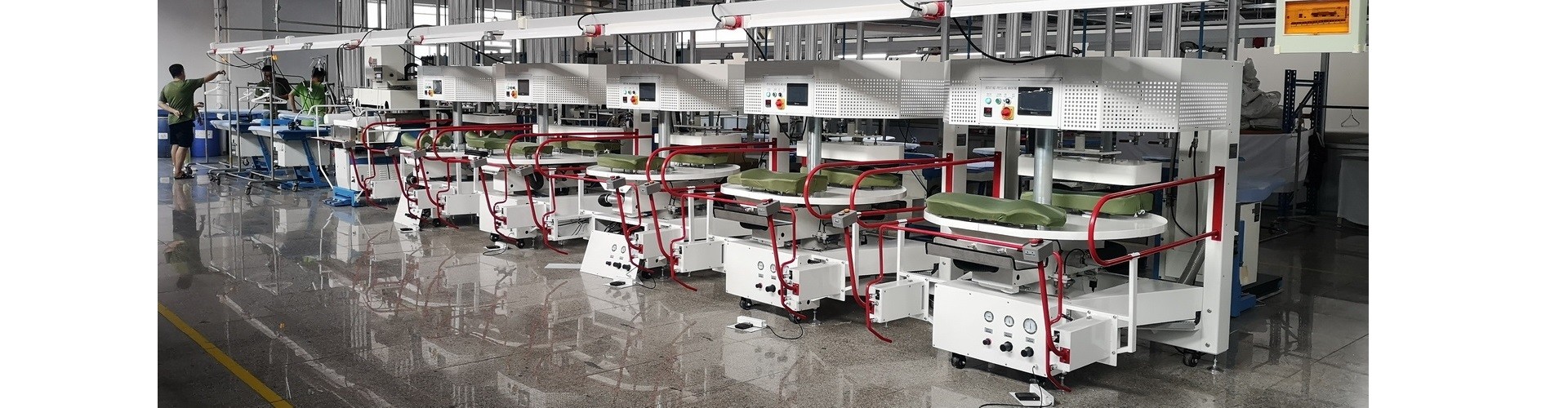
Ligne de presses industrielles rotatives / pivotantes
Débit maximal, temps d'arrêt minimal
Q : Je presse moins de 10 costumes par jour, ai-je besoin d'une machine industrielle ?R : Non. Surdimensionner signifie payer pour une capacité et une énergie que vous n'utilisez jamais. Une presse à table aspirante de qualité offre la même qualité de finition à faible volume tout en réduisant les coûts de fonctionnement.
Q : Combien de temps faut-il pour presser une seule veste ?R : Avec une récupération de vapeur et une aspiration adaptées, 3 à 6 minutes est typique. Prendre constamment plus de 10 minutes signale généralement un décalage de pression ou d'aspiration, pas un manque de compétence de l'opérateur.
2. Adaptez le système de chaleur et de vapeur à vos tissus
La laine, le coton, le lin et les synthétiques réagissent très différemment à la chaleur et à l'humidité. Une machine sans contrôle réglable de la vapeur et de la température brûlera les tissus délicats et aplatira la laine lourde.
Chaudière intégrée : chauffe rapide, gain de place, idéal pour moins de 50 vêtements par jour.
Chaudière indépendante : récupération plus rapide sous charge continue pour un volume plus élevé.
Système d'aspiration : extrait l'humidité et fixe le pli pour éviter les reflets disgracieux.
Thermostat et contrôle de vapeur : essentiel pour le cachemire, les mélanges de soie et autres tissus délicats.
Q : Une chaudière intégrée est-elle meilleure qu'une chaudière séparée ?R : Les chaudières intégrées chauffent plus vite et économisent de l'espace, mais les chaudières séparées récupèrent plus rapidement en utilisation continue, ce qui vaut l'investissement au-dessus d'environ 60 vêtements par jour.
Q : Une seule machine peut-elle gérer à la fois les costumes en laine et les chemises en coton ?R : Oui, à condition qu'elle offre des réglages de température et de vapeur réglables. Les presses à température fixe sont la principale cause de brûlures et de marques de brillance.
3. Pression, aspiration et taille de la table
Une pression constante sur toute la zone de pressage distingue les équipements professionnels des unités de qualité amateur. Demandez aux fournisseurs la pression nominale en bars et confirmez le débit du moteur d'aspiration, pas seulement sa puissance.
Q : Quelle pression me faut-il pour la laine lourde ?R : Pour les vestes structurées en laine, recherchez une presse qui maintient environ 5 à 7 bars à la surface de repassage. Trop peu de pression laisse des plis ; trop de pression aplatit le tombé naturel du tissu.
Q : La taille de la table est-elle importante si je ne presse que des vestes ?R : Oui. Une table trop petite oblige à repositionner plusieurs fois, vous ralentit et crée des lignes de finition inégales. Mesurez votre plus grand vêtement avant de décider.
4. Commandes, sécurité et ergonomie
Les machines modernes ajoutent l'arrêt automatique, la protection contre la surchauffe et la commande par pédale. Ce ne sont pas des luxes : ils réduisent la fatigue de l'opérateur, préviennent les brûlures et diminuent le risque d'assurance professionnelle.
Q : Les fonctions de sécurité automatiques valent-elles le coût supplémentaire ?R : Pour les ateliers multi-opérateurs, absolument. L'arrêt automatique et les coupures thermiques préviennent à la fois les brûlures et le coûteux grillage des éléments chauffants.
Q : Quelles caractéristiques ergonomiques dois-je vérifier ?R : Hauteur de table réglable, pédale bien amortie et levier de vapeur accessible. L'ergonomie affecte directement la production quotidienne et la rétention du personnel.
5. Coût, retour sur investissement et support après-vente
Le prix d'achat n'est qu'une partie de l'équation. Calculez le coût total de possession : consommation d'énergie, traitement de l'eau, pièces de rechange et temps d'arrêt. Une machine qui permet d'économiser 20 minutes par jour peut se rentabiliser en quelques mois.
Q : Quelle garantie dois-je attendre ?R : Les fournisseurs réputés offrent 12 à 24 mois sur les composants majeurs et disposent de pièces de rechange dans votre région. Un revendeur qui ne peut pas fournir de pièces localement représente un coût caché à long terme.
Q : Comment vérifier un fournisseur avant d'acheter ?R : Demandez de vraies références clients, une vidéo d'usine et un essai de pressage sur votre propre tissu. Les fournisseurs honnêtes accueillent cela : cela protège les deux parties.
6. Installation, formation et conformité
Vérifiez la tension, la phase et les exigences de certification de la chaudière dans votre pays avant l'expédition. Demandez une assistance d'installation sur site ou par vidéo et une formation des opérateurs : une session de deux heures évite généralement des mois d'erreurs coûteuses.
Q : Ai-je besoin d'un câblage électrique spécial ?R : Les presses industrielles nécessitent souvent une alimentation triphasée de 380 V. Vérifiez l'alimentation de votre installation et confirmez-la auprès du fabricant avant de commander.
Q : La formation des opérateurs est-elle vraiment nécessaire ?R : Oui. Un bon timing de la vapeur et une bonne séquence d'aspiration déterminent directement la qualité de la finition ; les opérateurs non formés endommagent plus de vêtements que les machines défectueuses.
Conclusion : Décidez avec des données, pas avec des suppositions
Choisir la bonne presse à costumes revient à adapter la capacité, la gamme de tissus, la pression et le support à votre entreprise réelle. Privilégiez un fournisseur qui fournit des références vérifiables, un service après-vente réactif et des pièces de rechange disponibles, car une presse à costumes est un investissement de dix ans, pas un achat unique.
En savoir plus


 Votre message doit contenir entre 20 et 3 000 caractères!